Plenary Speakers
Plenary Speaker Ⅰ

Prof. Aiguo Song, Southeast University
Title: Force Feedback Teleoperation Robot and Its Application in Rehabilitation
Abstract: Human-robot Interaction teleoperation robot is currently the frontier and hot-point of the robotics research. The interactive robot combines the human intelligence with robot viability in unknown environments, so that it is able to perform the complex tasks or pre-unknown tasks in unknown or dangerous environments. Telepresence is core technique of the human-robot interaction. In this report, we review the history of the force feedback teleoperation robot, and illustrate the architecture of the force feedback teleoperation robot system. Force feedback teleoperation system allows humans to perform complex tasks in a remote or inaccessible environment, while providing haptic feedback to the human operator. The incorporation of real-time haptic feedback as well as visual information in the teleoperation control loop can lead to significant improvements in task performance, feeling of presence. Then we discuss its four key techniques, that is force sensing technique, force feedback and tactile display technique, control strategy under time delay, predictive virtual environment modeling. At last, we briefly introduce the development of force feedback teleoperation robot system and its applications in rehabilitation therapy areas at Southeast University during the past two decades.
Biography: Aiguo Song received the Ph.D degree in Measurement and Control from Southeast University, Nanjing, China in 1996. From 1996 to 1998, he was an Associate Researcher with the Intelligent Information Processing Laboratory, Southeast University, China. From 1998 to 2000, He was an associate Professor with the School of Instrument Science and Engineering, Southeast University, China. From 2000 to 2003, he was the Director of the Robot Sensor and Control Lab, Southeast University, China. From April, 2003 to April, 2004, he was a visiting scientist with the Lab for Intelligent Mechanical Systems (LIMS), Northwestern University, Evanston, USA. He is currently the Professor with the School of Instrument Science and Engineering, Southeast University, China, and also the Director of Robot Sensor and Control Laboratory, the President of Nanjing Advanced Robotics Research Institute. His current interests concentrate on human-robot interaction teleoperation robot, force/tactile sensors, haptic display, space robot, and rehabilitation robot. He has published more than 380 peer reviewed journal papers, and 280+ papers have been indexed by SCIE, and SCI cited time is 3500+. He received the best paper awards 13 times. He is a member of Chinese Instrument and Control Association, IEEE senior member, Chair of IEEE Nanjing Section Robotics and Automation Society Chapter. He serves as Associate Editor for 5 SCIE indexed Journals, and served as Chair or Co-Chair of 30+ International Conference/Symposium. He was recipient of the second prize of the National Scientific and Technological Progress in 2017, and recipient of the National Outstanding Youth Fund of National Natural Science Foundation of China.
Plenary Speaker Ⅱ

Prof. Jian S. Dai, FIEEE, FASME, Academician of the Royal Academy of Engineering, Editor-in-Chief of ROBOTICA, Southern University of Science and Technology, Honorary Chair Professor of King's College London
Title: Arts Inspirational Robotics —— Origami, Oriblocks and Metamorphosis
Abstract: Arts are modes of expression that use skills or imagination in the creation of aesthetic objects and environments. An artist often has a wild thinking that brings forth great imaginations and creates aesthetic objects. This type of creation is an inspiration to robot creations. Since 1996, the art-filled cartons in the packaging line raised much interest of the speaker that took the inspiration to create a novel class of mechanisms as the metamorphic mechanisms. This led to creations in the early stage of Origami mechanisms and Origami robots. The inspiration came from various arts in the form of decorations and ornamentation and contributed to the metamorphic hand with a foldable palm originated from a paper folding. Most recently, the arts led to a novel creation of mechanisms and robots from geometrical entities and geometrical bodies including rotators and Platonic polyhedrons. This creation is the Oriblocks. All creation leads to metamorphosis with reconfigurable robots to meet the various environments and changing demands for operations. The talk will cover 25 years of development with various applications including grasping, manipulation, handling in manufacturing, productions, and human-robot interactions. The talk will be partly based on the monography entitled “Screw Algebra, Lie Group and Lie Algebra” published by Higher Education Press in 2014 and in 2020 with the 2nd edition.
Biography: Professor Dai is an Academician and Fellow of the Royal Academy of Engineering (FREng). He is also an IEEE Fellow and an ASME Fellow and is the Editor-in-Chief of the international journal ROBOTICA (established in 1983) and Subject Editor of Mechanism and Machine Theory. Pioneering contributions in reconfigurable mechanisms and robots, in origami robots, in ankle rehabilitation robots and in metamorphic robots and reconfigurable robots, he received the 2015 DEC Mechanisms and Robotics Award as the 27th recipient since the inception in 1974 and the 2020 ASME Machine Design Award as the 58th recipient since the inception in 1958 in addition to many of journal and conference paper awards including the Crossley Award and the AT Yang Theoretical Kinematics Award. Published over 600 peer-reviewed papers, 10 authored books and with over 15000 citations, Academician Dai graduated over 45 PhD students who are now faculty members of world-leading universities and affiliated with prestigious cooperative companies and becoming successful entrepreneurs.
Plenary Speaker Ⅲ
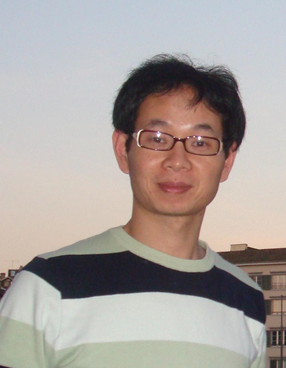
Prof. Shengyong Chen, Tianjin University of Technology
Title: Vision Perception for Robot Working in Three-Dimensional Space
Abstract: This talk presents the principles of 3D vision perception and some ongoing projects on robot vision, including object localization, segmentation, recognition, reconstruction, representation, feature extraction, target tracking, pattern analysis, etc. Examples of implementation are shown with practical intelligent systems, e.g. for self-localization of the robots, planning a path for tracking a person, classification of objects in industrial production, or interpretation of traffic events.
Biography: Prof. Shengyong Chen received the Ph.D. degree from City University of Hong Kong in 2003. He worked as a guest researcher at University of Hamburg, Germany, where he received a fellowship from the Alexander von Humboldt Foundation in 2006. He was a visiting professor at Imperial College London, from 2008 to 2009. He is currently a full Professor and Vice-President in Tianjin University of Technology. He is an IET Fellow and an IEEE senior member. His research interests include machine vision and robotics. He received the National Outstanding Youth Foundation Award of NSFC. He has applied over 100 patents and published over 400 scientific papers, including 80 in IEEE Transactions, and 5 Best Paper Awards from international organizations. His work received over 12000 citations in Google Scholar.
Plenary Speaker Ⅳ

Prof. Shijie Guo, Hebei University of Technology, Fudan University
Title: State of the art and future trend in nursing-care robots: from technologies to applications
Abstract: Along with the accelerating aging of society, people expect more about care robots, but the current robotics technology is not yet able to meet people's anticipation. Most care robot products are single-function robots that can only accomplish specific tasks, such as mobility assistance, meal assistance, and diaper care, which cannot meet the complex care needs of elderly people. This report will first introduce the state of the art of technologies and applications of single-function robots; second, investigate the trends and core technologies involved in the development of multifunctional nursing-care robots; and finally, discuss the technical challenges of future nursing robots based on Guo group’s recent work.
Biography: Prof. Guo graduated from Tokyo Institute of Technology, Japan in 1992 with a Ph.D. in engineering. He is currently a Professor at Hebei University of Technology, a Distinguished Chair Professor at Fudan University, and the Director of the Engineering Research Center of the Ministry of Education for Intelligent Rehabilitation Devices and Detection Technologies. Prof. Guo has long been dedicated to the research of nursing-care robots, covering basic theories, core technologies, and their applications. Guo and his group recently focused on robotic e-skin, electroactive polymer artificial muscles, nursing robots, rehabilitation robots, exoskeleton robots, etc.
Plenary Speaker Ⅴ

Prof. Haibin Yu, Chinese Academy of Sciences
Title: Digital twin based robotic system for precision machining and assembly
Abstract: Due to the traditional off-line process planning cannot perform real-time adjustment of manufacturing process through perception, it is difficult to fulfill high performance machining and assembly of major aerospace and energy equipment. Digital twin technology provides a novel solution for on-line optimization for machining and assembly automation. This report is about digital twin based robotic systems for precision machining and assembly. First, the requirements and the challenges of precision machining and assembly technology for high-end equipment are analyzed. Next, the development and characteristics of digital twin is introduced, followed by serveral typical implementation modes. The framework and the key enabling technologies of digital twin systems are also discussed in detail. Then, the digital twin technology integrated with perception, modeling and simulation is proposed for precision machining and assembly. Finally, several cases of digital twin based robotic systems are presented in high performance machining and assembly scenarios.
Biography: Haibin Yu, Professor and Doctoral Supervisor of Shenyang Institute of Automation, Chinese Academy of Sciences, and Director of the State Key Laboratory of Robotics. He has been engaged in the research of industrial automation and control system, development of high reliable real-time industrial networks and control systems. He currently serves as the Vice Chair of the Chinese Association of Automation, and the Chair of China national technical committee for Industrial Process Measurement Control and Automation Standardization. He is a fellow of the International Society of Automation, a Winner of National Science Fund for Outstanding Young Scholars as well as an academic leader of the Innovation Research Group awarded by Natural Science Foundation of China.
Plenary Speaker Ⅵ

Prof. Honghai Liu, IEEE Fellow, Haribin Institue of Technology, Shenzhen
Title: Explore functional corticomuscular coupled information for medical devices and systems
Abstract: Functional corticomuscular coupled information plays a crucial role in human motion science and applications that requires joint multidisciplinary efforts such as brain science and rehabilitation. This talk attempts to present the past, current and future of funcaitonal corticomuscular information interaction and its role in human centred medical systems. One of the problems is that majority of motor performance is assessed by subjective qualitative assessments based on individual movement protocols. It is evident that there is no unified standardized motor function metrics technology, restricting a wide spectrum of applicatons such as stroke rehabilitation. This talk presents the reseach outcomes of the lab led by the speaker with a goal of developing a metric framework to measure brain-body interaction information. The talk is concluded with research directions and open discussions.
Biography: Honghai Liu received his Ph.D from King’s College, University London, UK. He is a Chair Professor at Haribin Institue of Technology, Shenzhen, China. He previously held research appointments at King’s College London, University of Aberdeen, University of Portsmouth and project leader appointments in large-scale industrial control and system integration industry. He is interested in sensing and understanding for medical systems and applications with an emphasis on approaches that could make contribution to the intelligent connection of perception to action using contextual information. He has authored/co-authored more than 200 per-reviewed journals and conference papers. He is an Member of Europe Academy of Sciences, IET Fellow and IEEE Fellow.

